Destined Records
Naadi leaves are not believed to exist for every person. They are said to be available only for destined souls who are drawn to the reading at the right time.
History of Nadi
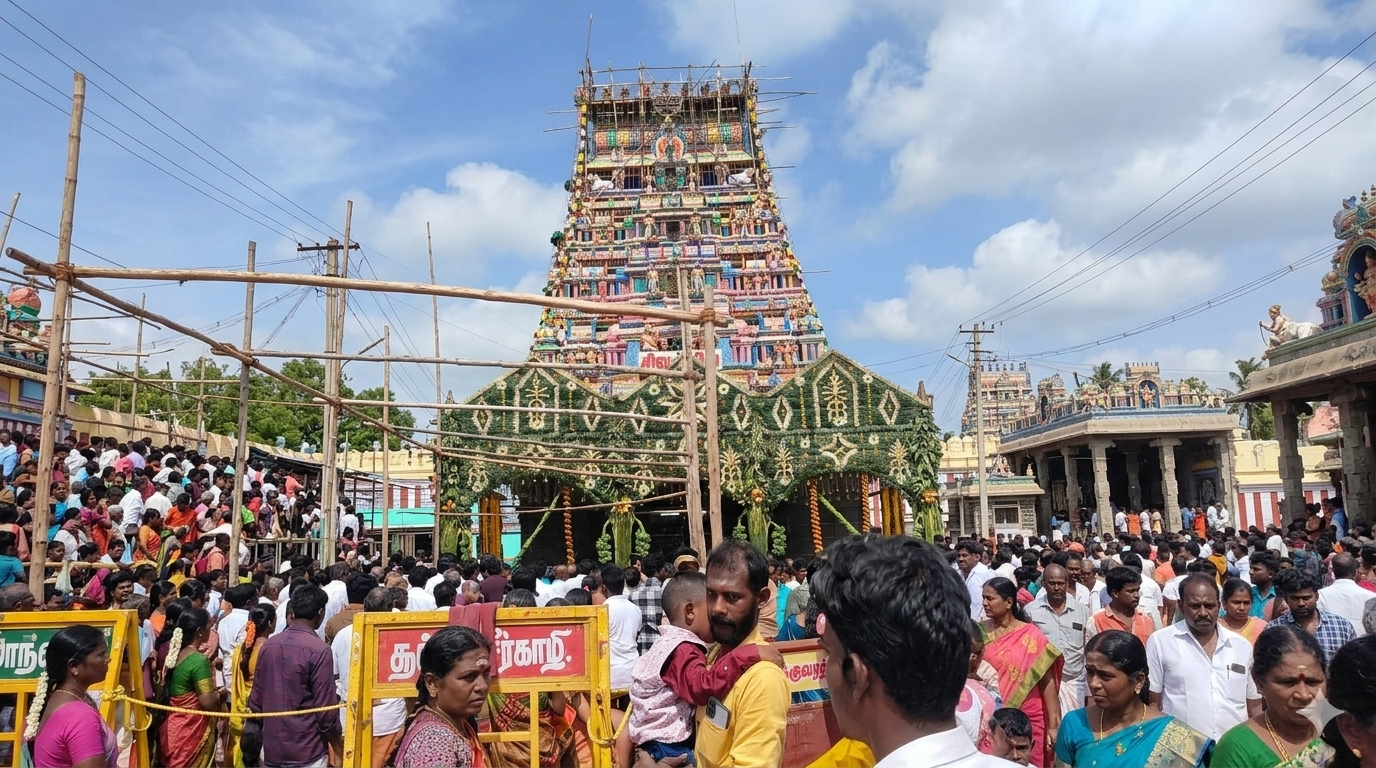
In Vaithiswarankoil, Tamil Nadu, the Naadi tradition preserves a remarkable belief: the past, present, and future of destined seekers can be traced through ancient palm leaf records.
A temple town known as one of the living centers of Naadi wisdom, palm leaf reading, and Siddha heritage.
Ancient Siddha Wisdom
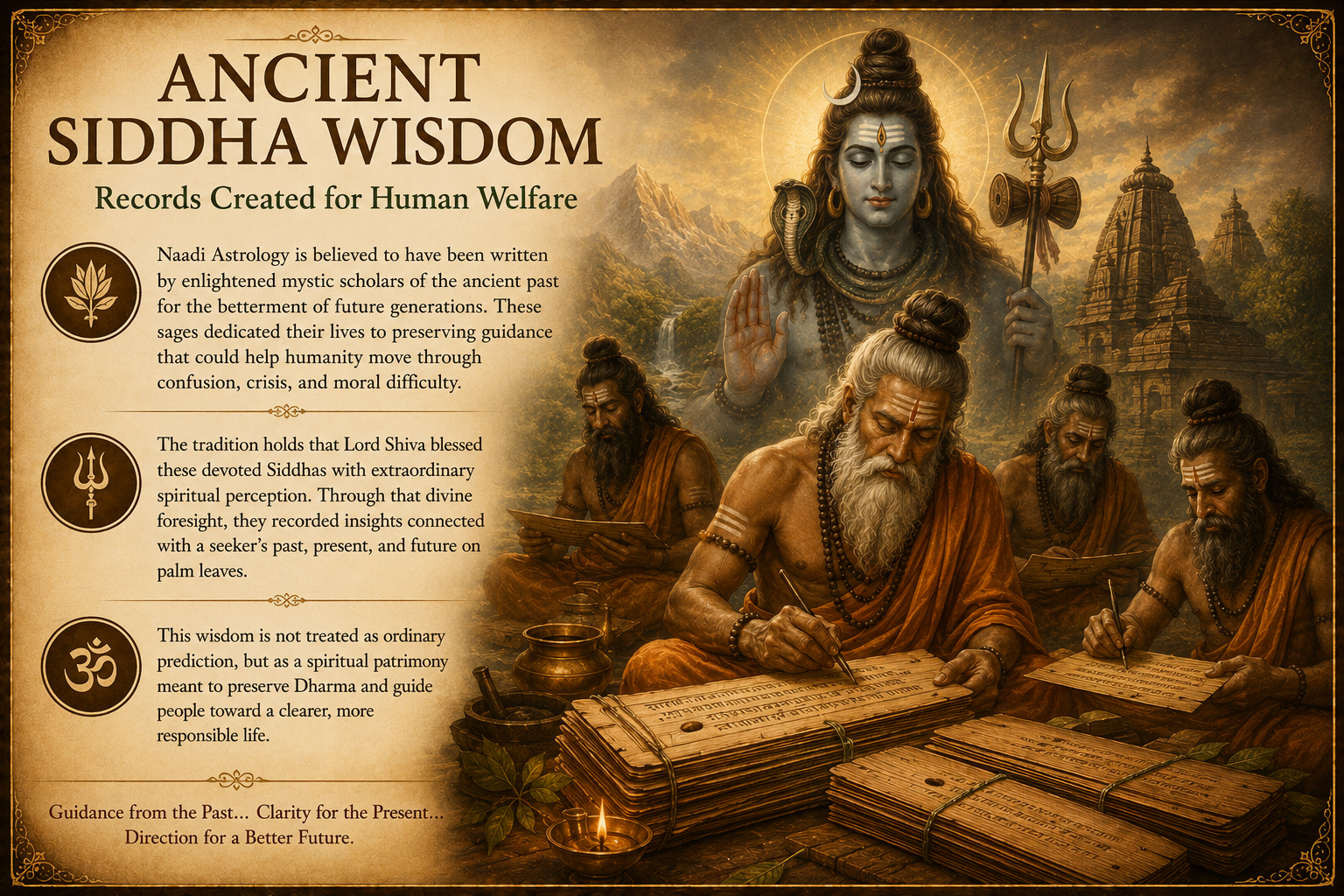
Naadi Astrology is believed to have been written by enlightened mystic scholars of the ancient past for the betterment of future generations. These sages dedicated their lives to preserving guidance that could help humanity move through confusion, crisis, and moral difficulty.
The tradition holds that Lord Shiva blessed these devoted Siddhas with extraordinary spiritual perception. Through that divine foresight, they recorded in sights connected with a seeker’s past, present, and future on palm leaves.
This wisdom is not treated as ordinary prediction, but as a spiritual patrimony meant to preserve Dharma and guide people toward a clearer, more responsible life.
A Bird’s-Eye View
In ancient times, palm leaves were used to preserve knowledge across many fields, including Ayurveda, Siddha, Varma, astronomy, and astrology. Naadi records form one part of this vast inheritance.
Naadi leaves are not believed to exist for every person. They are said to be available only for destined souls who are drawn to the reading at the right time.
The inscriptions are written in old poetic Tamil, requiring trained Naadi readers who understand the language, codes, and traditional method of interpretation.
This division is considered especially detailed, presenting predictions through a sacred dialogue between Lord Shiva and Goddess Parvathi.
Vaithiswarankoil remains a key center of this heritage, surrounded by temples and generations of readers who continue the tradition.
Legacy of Marathas
Naadi Jothidam was originally associated with Sanskrit palm leaf writings attributed to great Rishis such as Bhrigu, Agasthiya, Kaushika, Vashishtha, and others. The tradition became especially prominent in South India.
In 1676, Sri Venkoji Maharaja, a descendant of Sivaji Maharaja, established Maratha rule in Tamil Nadu with Tanjore as the capital. The Marathas were patrons of art, science, medicine, Vedas, and astrology, preserving many ancient works in the Saraswathi Mahal Library.
During the reign of King Sarabhoji Maharaja, Sanskrit works, including Naadi-related manuscripts, were translated into old poetic Tamil and preserved on palm leaves. Because of this support, the Naadi tradition owes a deep debt of gratitude to the Maratha rulers who protected these treasures for future generations.
Maratha rule established in Tamil Nadu with Tanjore as center.
Control passed from the Marathas to the British administration.
Ancient works were preserved, translated, and protected.